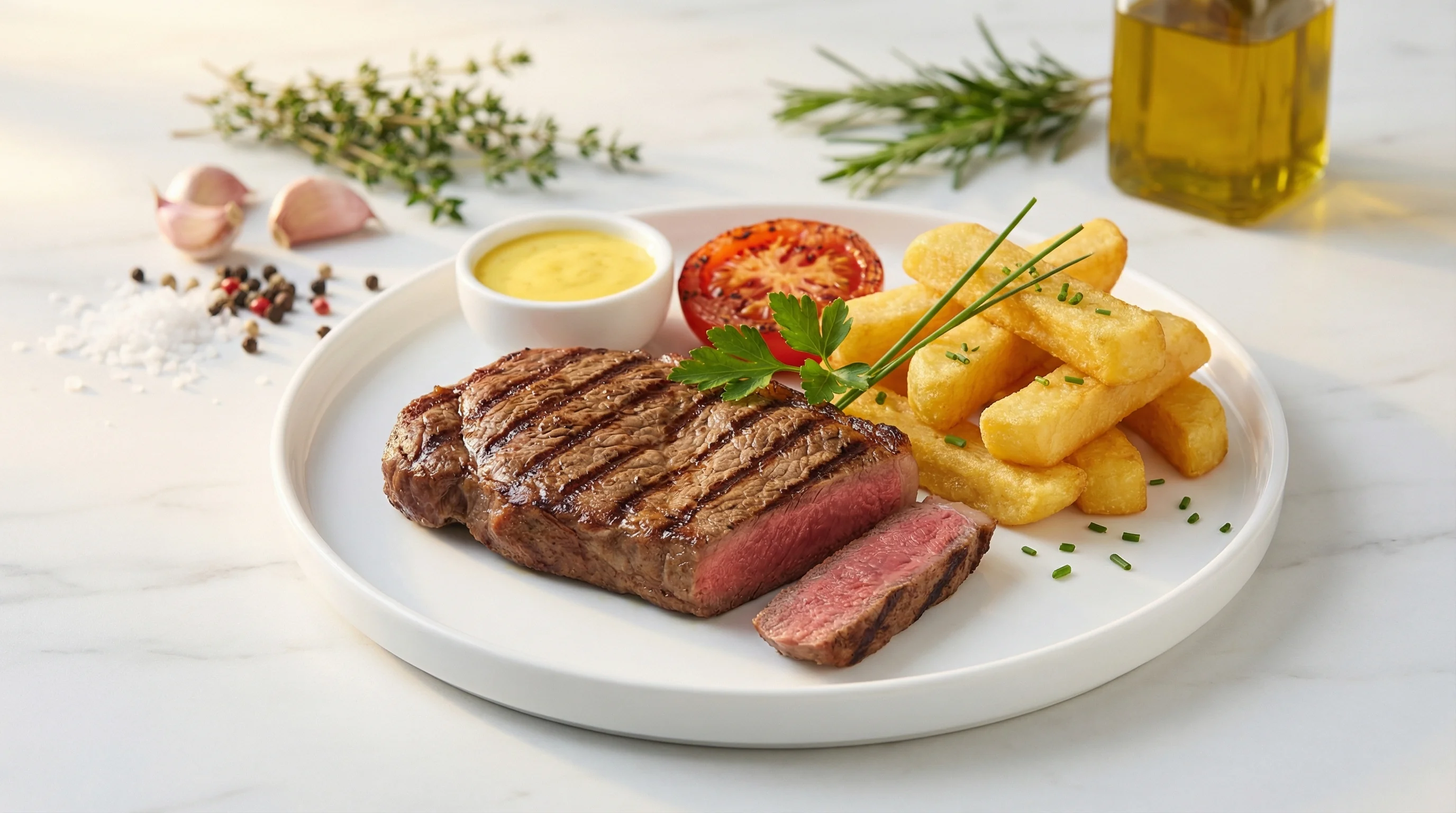
Perfect Grilled Sirloin with Double-Fried Chips (Low FODMAP)
Restaurant-quality sirloin steaks with golden, crispy double-fried chips – a classic British steakhouse dinner that's completely gut-friendly and IBS-safe.
This recipe is completely low FODMAP as written with strict portion control. Beef is naturally FODMAP-free and an excellent protein source for IBS sufferers - the 200g sirloin steak portions are well within safe limits. Potatoes are low FODMAP in all tested portions (300g per serving here) and provide safe, satisfying carbohydrates. Tomatoes are low FODMAP up to 75g per serving, which is why we specify exactly 75g (1 medium tomato) per person. Dijon mustard is low FODMAP in typical serving sizes (1 tablespoon) - Maille and Grey Poupon brands are verified safe options. Use pure vegetable oil or light olive oil for frying; avoid blended oils that may contain high-FODMAP additives. Avoid adding garlic butter, compound butters with shallots or onions, onion rings, creamy sauces with milk or cream in large amounts, or wheat-based sauces which would make this high FODMAP. This meal provides a good balance of protein, carbohydrates, and fats without any digestive triggers when portions are respected.
There's something deeply satisfying about a perfectly grilled steak paired with golden, crispy chips. This classic British steakhouse combination proves that eating low FODMAP doesn't mean sacrificing the meals you love. The beauty of this recipe lies in its simplicity – quality beef, starchy potatoes, and proper technique are all you need to create a restaurant-worthy dinner at home.
The double-frying method is the secret to achieving chips that are fluffy inside with an irresistibly crispy exterior. The first fry at a lower temperature cooks the potatoes through, while the second blast at higher heat creates that golden crunch we all crave. Maris Piper, King Edward, or Golden Wonder potatoes work beautifully because their high starch content yields the fluffiest results.
For IBS sufferers, this recipe is wonderfully safe. Beef is naturally FODMAP-free, and potatoes are a low FODMAP staple that provides satisfying carbohydrates without triggering symptoms. The key is keeping portions reasonable and avoiding high-FODMAP accompaniments like garlic butter or onion rings. Instead, we're serving these steaks with grilled tomatoes and mustard – both low FODMAP options that add flavor without the digestive distress.
Bringing your steaks to room temperature before cooking ensures even cooking throughout, while the resting period after grilling allows the juices to redistribute, guaranteeing a tender, juicy result. Whether you prefer your steak rare, medium, or well-done, this foolproof method delivers steakhouse-quality results every single time.
🥗 Ingredients
Metric
- large starchy potatoes (3 medium Maris Piper, Golden Wonder, or King Edward), peeled
- vegetable oil or light olive oil for deep frying, plus 1 tablespoon extra for brushing steaks
- sirloin steaks at room temperature, about 2.5cm thick
- tomatoes (2 medium), halved - 75g per serving maximum
- sea salt
- freshly ground black pepper
- Dijon mustard for serving (Maille or Grey Poupon brands verified safe)
Imperial
- large starchy potatoes (3 medium Maris Piper, Golden Wonder, or King Edward), peeled
- vegetable oil or light olive oil for deep frying, plus 1 tablespoon extra for brushing steaks
- sirloin steaks at room temperature, about 2.5cm thick
- tomatoes (2 medium), halved - 75g per serving maximum
- sea salt
- freshly ground black pepper
- Dijon mustard for serving (Maille or Grey Poupon brands verified safe)
👨🍳 Instructions
- 1
Prepare the chips
Cut the peeled potatoes into thick chips, approximately 1cm wide by 7cm long. The crucial thing is ensuring all chips are roughly the same size so they cook evenly. Rinse the cut chips thoroughly under cold running water to remove excess surface starch, then pat them completely dry with clean kitchen towels. Any moisture will cause dangerous splattering when they hit the hot oil.
⏱️ 10 min - 2
First fry at lower temperature
Fill a deep-fat fryer or large, heavy-bottomed saucepan two-thirds full with vegetable oil. Heat the oil to 140-160°C (285-320°F), checking with a thermometer if not using a fryer. Carefully lower the chips into the hot oil using a slotted spoon and cook for 8 minutes until tender but not colored. They should be cooked through but still pale. Remove with a slotted spoon and drain on kitchen paper. This first fry can be done ahead of time.
⏱️ 10 min - 3
Second fry for golden crispness
Increase the oil temperature to 160-180°C (320-355°F). Once the oil reaches temperature, carefully add the par-cooked chips back into the oil. Fry for 2-3 minutes until they turn deep golden brown and develop a crispy exterior. Remove immediately with a slotted spoon, drain on fresh kitchen paper, and season generously with sea salt while still hot.
⏱️ 5 min - 4
Grill the steaks
While the chips are having their second fry, heat a ridged grill pan over high heat until smoking hot. Brush both sides of the room-temperature steaks lightly with vegetable oil and season generously with salt and freshly ground black pepper. Place the steaks on the hot grill pan and cook without moving for 2-3 minutes. Rotate the steaks 90 degrees to create attractive diamond grill marks, then cook for another 2 minutes.
⏱️ 5 min - 5
Finish cooking and rest
Flip the steaks over and repeat the process on the second side, rotating for grill marks. For rare steaks, cook 1 minute per side after the initial sear. For medium-rare, cook 2-3 minutes per side. For medium, cook 3-4 minutes per side, and for well-done, cook 4-5 minutes per side. Exact timing depends on steak thickness. Remove steaks from the pan and let them rest on a warm plate for 5 minutes before serving – this allows the juices to redistribute throughout the meat.
⏱️ 8 min - 6
Grill tomatoes and serve
While the steaks rest, place halved tomatoes cut-side down on the same grill pan and cook for 2-3 minutes until charred and softened. Serve the rested steaks alongside the crispy chips and grilled tomatoes, with Dijon mustard on the side for dipping. The combination of tender, juicy steak, crispy chips, and sweet grilled tomatoes creates a perfectly balanced steakhouse experience.
⏱️ 5 min
🔄 FODMAP-Friendly Swaps
All beef cuts are FODMAP-free; choose based on preference and budget. Rump is leaner, ribeye has more marbling, fillet is most tender.
All are FODMAP-free with high smoke points suitable for deep frying. Peanut oil adds subtle flavor; rice bran oil is very neutral.
All high-starch potatoes are low FODMAP and produce fluffy chips. Choose based on availability - Russets work well in North America.
Plain mustards without honey, garlic, or onion are low FODMAP. Wholegrain adds texture; English mustard is sharper and stronger.
Both are low FODMAP alternatives that grill beautifully. Red pepper is sweeter; zucchini is milder and absorbs grill flavors well.
🔬 The Science Behind This Recipe
The double-frying technique works through a fascinating interplay of temperature and moisture. During the first fry at 140-160°C, the potato's interior starches gelatinize and the cells soften, cooking the chips through without browning. This lower temperature allows heat to penetrate deeply without triggering the Maillard reaction that creates color and crispness. When you remove the chips and let them cool, the surface moisture evaporates and the outer layer begins to dry out.
The second fry at 160-180°C is where the magic happens. The higher temperature rapidly dehydrates the outer layer, creating a crispy shell through both moisture evaporation and the Maillard reaction – the chemical process between amino acids and reducing sugars that produces that irresistible golden-brown color and complex savory flavors. The dried exterior from the first fry means less moisture to evaporate, allowing the surface to crisp up quickly before the interior overcooks.
For your gut health, this meal is particularly beneficial. Beef provides complete protein with all essential amino acids, plus highly bioavailable iron and B vitamins that support energy production and nervous system function. Potatoes offer resistant starch, especially when cooled slightly after cooking, which acts as a prebiotic fiber that feeds beneficial gut bacteria without the fermentation issues that FODMAPs cause. The resistant starch passes through your small intestine undigested and reaches your colon, where it supports a healthy microbiome balance. Unlike high-FODMAP foods that can trigger IBS symptoms through rapid fermentation, resistant starch ferments slowly and produces beneficial short-chain fatty acids that reduce inflammation and support gut barrier integrity. This combination of easily digestible protein and gut-friendly carbohydrates makes this steakhouse classic an excellent choice for maintaining digestive comfort while enjoying a truly satisfying meal.
Download Printable PDF
Save this recipe for offline use