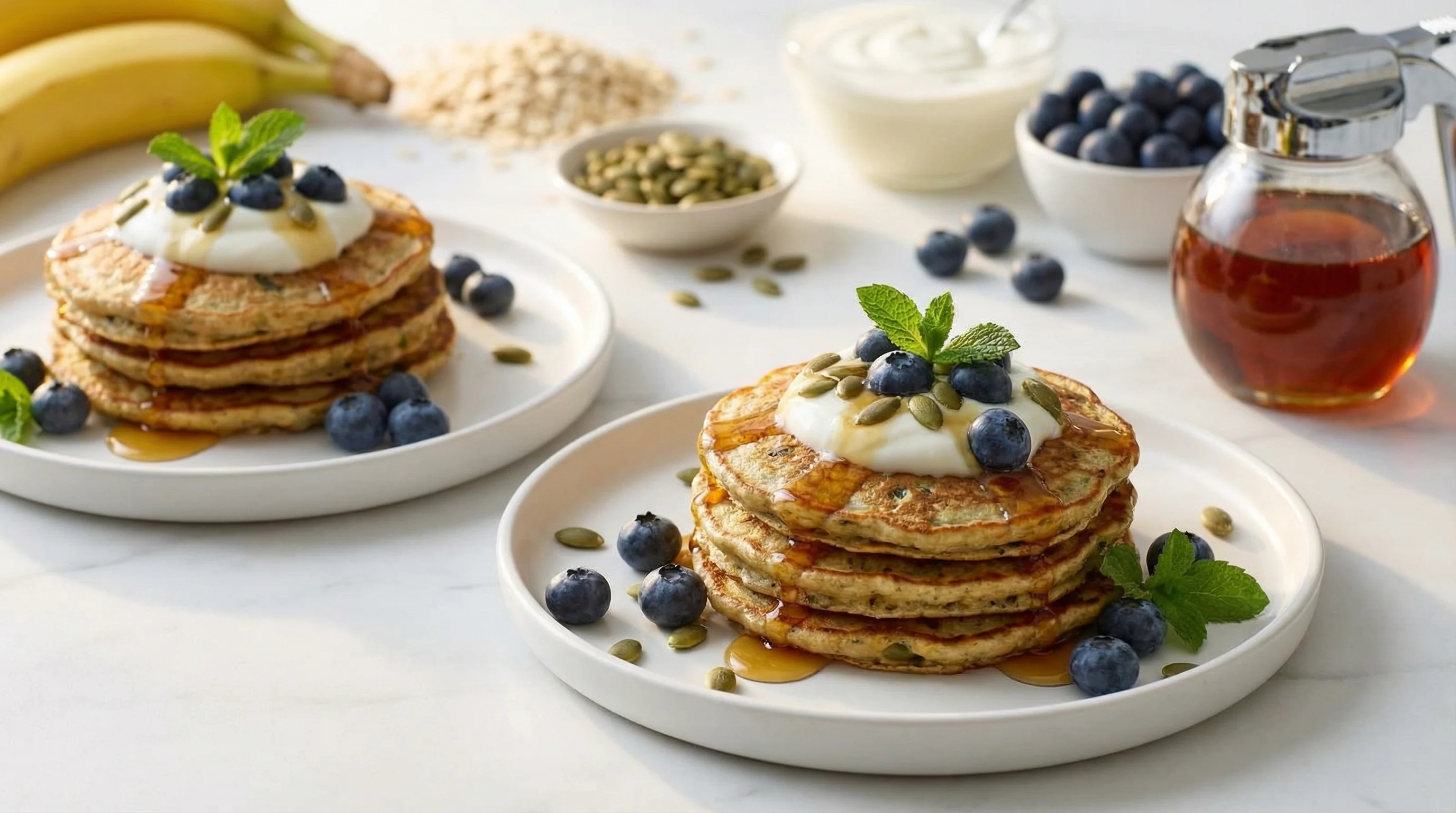
Banana Oat Pancakes with Pumpkin Seeds (Low FODMAP)
Naturally sweet pancakes made with firm bananas, oats, and pumpkin seeds create a gut-friendly breakfast that's both nourishing and delicious.
This recipe is carefully designed to be low FODMAP when portions are respected. Firm, unripe bananas are lower in FODMAPs than ripe bananas—Monash University lists unripe bananas as low FODMAP at 1 medium banana per serving. This recipe uses 3 bananas for 4 servings (0.75 banana per person), staying within safe limits. Oats are low FODMAP up to 52g per serving; this recipe provides 37.5g per serving. Pumpkin seeds are low FODMAP up to 2 tablespoons (20g); this recipe provides 15g per serving. Eggs are naturally FODMAP-free. Use lactose-free yogurt to avoid lactose issues. Blueberries are low FODMAP at 20 berries (28g) per serving. Pure maple syrup is low FODMAP up to 2 tablespoons per serving; limit to 1 tablespoon for optimal tolerance. Cooking does not significantly alter the FODMAP content of these ingredients. Use certified gluten-free oats if you have celiac disease or gluten sensitivity, as oats can be cross-contaminated during processing.
These banana oat pancakes prove that eating for digestive wellness doesn't mean sacrificing flavor or satisfaction. By using firm, unripe bananas—which are lower in FODMAPs than their spotty, overripe counterparts—we create naturally sweet pancakes that won't trigger IBS symptoms. The addition of pumpkin seeds brings a delightful nutty crunch and a boost of minerals like magnesium and zinc, while oats provide gentle, soluble fiber that many people with IBS tolerate beautifully.
What makes this recipe particularly special is its simplicity. With just five core ingredients, you can whip up a batch of golden, fluffy pancakes that rival any traditional recipe. The bananas act as both sweetener and binder, while the eggs provide structure and protein to keep you satisfied throughout the morning. Unlike wheat-based pancakes that can leave sensitive stomachs feeling heavy and bloated, these grain-free alternatives are light yet filling.
The key to success lies in choosing the right bananas—look for fruit that's still slightly green at the tips with minimal brown spots. These firmer bananas contain more resistant starch and less fructose, making them FODMAP-friendly in the portions used here. Serve these pancakes with a drizzle of pure maple syrup, a dollop of lactose-free Greek yogurt, and a handful of blueberries or raspberries for a breakfast that feels indulgent while being gentle on your digestive system. Whether you're managing IBS or simply seeking a wholesome breakfast option, these pancakes deliver comfort and nourishment in every bite.
🥗 Ingredients
Metric
- firm, unripe bananas 3 medium, mashed (about 300g total)
- rolled oats 150g (certified gluten-free if required)
- pumpkin seeds 60g (pepitas)
- free-range eggs 4 large
- vegetable oil 2-3 tablespoons for cooking
Imperial
- firm, unripe bananas 3 medium, mashed (about 10.5 oz total)
- rolled oats 1½ cups (certified gluten-free if required)
- pumpkin seeds ½ cup (pepitas)
- free-range eggs 4 large
- vegetable oil 2-3 tablespoons for cooking
👨🍳 Instructions
- 1
Prepare the pancake batter
In a large mixing bowl, combine the mashed bananas, oats, and pumpkin seeds. Crack the eggs directly into the bowl and whisk everything together vigorously until you have a thick, cohesive batter. The mixture should be chunky from the oats and seeds, with the banana and eggs binding everything together. Let the batter rest for 2-3 minutes to allow the oats to absorb some moisture.
⏱️ 5 min - 2
Heat and prepare the pan
Place a non-stick frying pan or griddle over high heat for about 1 minute, then reduce to medium heat. Lightly grease the surface with vegetable oil using a paper towel or brush. The pan is ready when a drop of water sizzles and evaporates immediately upon contact.
⏱️ 2 min - 3
Cook the pancakes
Spoon about 1 tablespoon of batter onto the hot pan for each pancake, gently spreading it into a round shape about 8cm (3 inches) in diameter. Cook for 2-3 minutes without disturbing, until you see the edges beginning to set and small bubbles forming on the surface. The underside should be deep golden brown with crispy edges.
⏱️ 3 min - 4
Flip and finish cooking
Using a thin spatula, carefully flip each pancake and cook for another 2-3 minutes on the second side until golden brown and cooked through. The pancakes should feel firm when gently pressed. Transfer to a warm plate and repeat with the remaining batter, adding a little more oil to the pan between batches as needed. If you have a large pan, you can cook 3-4 pancakes simultaneously.
⏱️ 15 min - 5
Serve and enjoy
Stack the warm pancakes on serving plates and top with a generous dollop of lactose-free Greek yogurt. Drizzle with pure maple syrup (1 tablespoon per serving maximum) and scatter fresh blueberries (20 berries per serving) over the top. Serve immediately while the pancakes are still warm and slightly crispy around the edges.
⏱️ 5 min
🔄 FODMAP-Friendly Swaps
Regular yogurt contains lactose, which is high FODMAP. Lactose-free versions or plant-based alternatives are safe options. Choose unsweetened varieties to avoid added high FODMAP sweeteners.
Unripe bananas contain resistant starch and lower fructose levels, making them lower FODMAP than very ripe bananas. Avoid bananas with extensive brown spotting as these have higher fructose content.
Sunflower seeds are low FODMAP up to 2 tablespoons per serving and provide similar texture and nutritional benefits including healthy fats and minerals.
🔬 The Science Behind This Recipe
The FODMAP-friendly magic of this recipe lies in understanding how banana ripeness affects digestive tolerance. Unripe bananas contain resistant starch—a type of carbohydrate that resists digestion in the small intestine and acts more like fiber. As bananas ripen, this resistant starch converts to simple sugars, including fructose. For people with IBS, excess fructose can be poorly absorbed and fermented by gut bacteria, causing bloating, gas, and discomfort. By choosing firm, slightly green bananas, we keep fructose levels low while maintaining natural sweetness.
Oats contribute beta-glucan, a soluble fiber that forms a gel-like substance in the digestive tract. This slows digestion and helps stabilize blood sugar levels, preventing the energy crashes that can accompany high-sugar breakfasts. Unlike insoluble fibers that can irritate sensitive digestive systems, beta-glucan is generally well-tolerated and may even support beneficial gut bacteria without causing excessive fermentation. The key is portion control—Monash University confirms that up to 52g of oats per serving remains low FODMAP.
Pumpkin seeds add not just texture but also magnesium, which plays a crucial role in muscle relaxation throughout the digestive tract. Many people with IBS experience intestinal cramping, and adequate magnesium intake may help reduce this discomfort. The eggs provide high-quality protein and healthy fats that slow gastric emptying, helping you feel satisfied longer and preventing the blood sugar spikes that can exacerbate digestive symptoms. Together, these ingredients create a breakfast that nourishes without overwhelming your digestive system, proving that gut-friendly foods can be both delicious and satisfying.
Download Printable PDF
Save this recipe for offline use