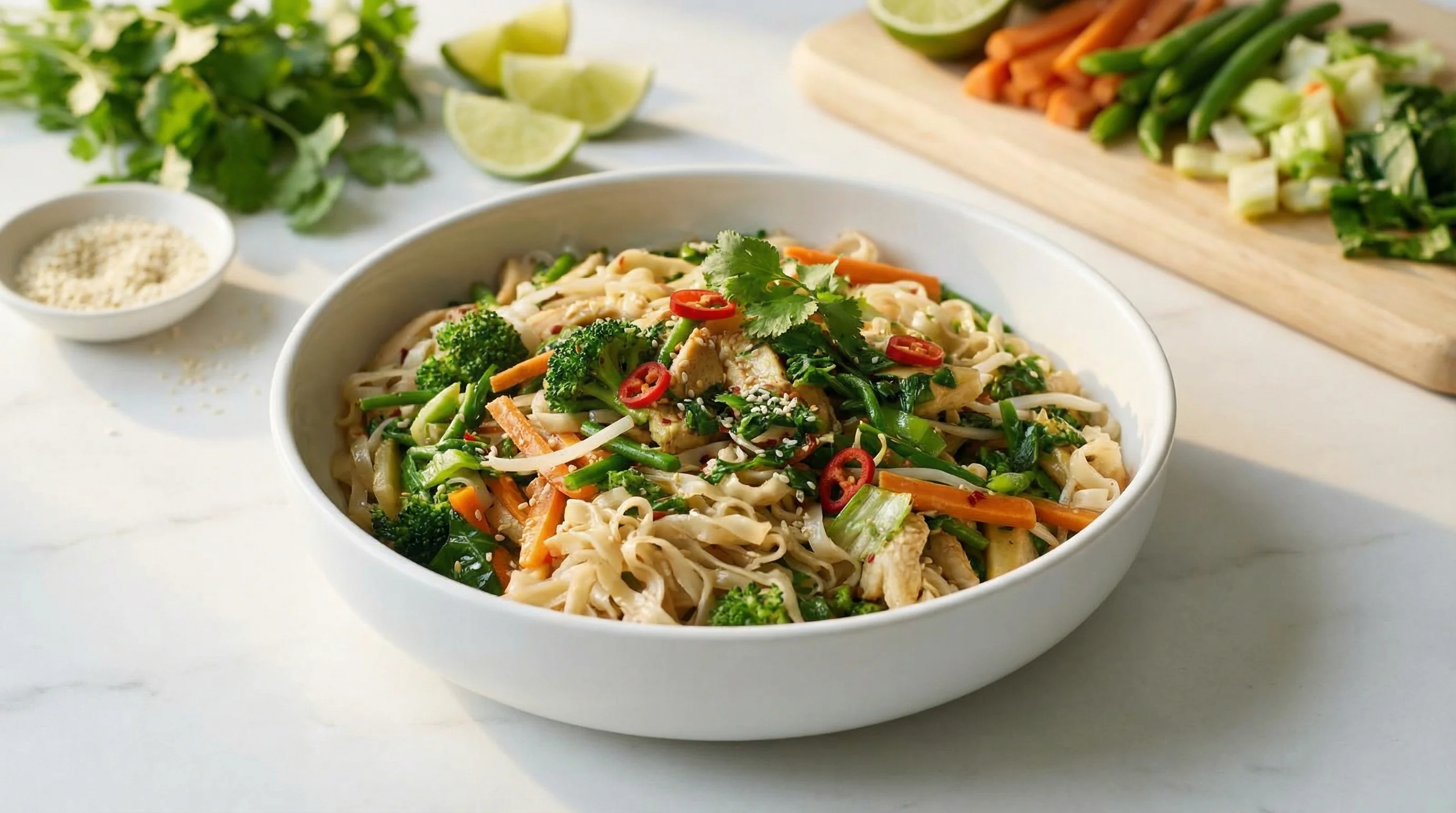
Quick Chicken Satay Noodle Bowl (Low FODMAP)
Vibrant stir-fried chicken and crisp vegetables tossed with rice noodles in a creamy peanut-ginger sauce—ready in just 30 minutes for busy weeknights.
This recipe is carefully designed to be low FODMAP when served in the portions specified. Carrots (150g total), broccoli (200g total, about 50g per serve which is well under the 75g safe limit), green beans, pak choi, bamboo shoots, and beansprouts are all low FODMAP vegetables in these amounts. Fresh ginger is safe at 2 tsp total and adds flavor without FODMAPs. Rice noodles are naturally gluten-free and low FODMAP. Peanut butter is low FODMAP in servings up to 2 tablespoons per person, and this recipe uses exactly 2 tablespoons total divided among 4 servings (½ tablespoon each), keeping you safely within Monash University's tested limits. Ensure your soy sauce and tamari are certified gluten-free, as regular versions contain wheat which is high FODMAP. Sesame seeds and sesame oil are both low FODMAP. Avoid adding garlic or onion, which would make this dish high FODMAP.
When you're craving the bold, nutty flavors of satay but need to keep your gut happy, this quick noodle bowl delivers on all fronts. This recipe transforms simple ingredients into a restaurant-worthy dish that's completely FODMAP-friendly and ready faster than takeout.
The magic happens in a hot wok where chicken strips get perfectly seared alongside a rainbow of vegetables—sweet carrots, tender broccoli florets, and crisp green beans. Fresh ginger adds that essential aromatic punch without triggering IBS symptoms, while pak choi and beansprouts contribute authentic Asian texture and crunch. The satay sauce is beautifully simple: creamy peanut butter whisked with gluten-free soy sauce, tamari, and sesame oil creates that signature rich coating we all love.
What makes this recipe particularly brilliant for FODMAP followers is its reliance on naturally safe ingredients. There's no garlic or onion to worry about, no wheat-based noodles to cause bloating, and the peanut butter portion stays well within safe limits when divided among four servings. Rice noodles cook in just minutes and soak up the sauce beautifully, while toasted sesame seeds add a final nutty flourish.
This is the kind of meal that proves eating low FODMAP doesn't mean sacrificing flavor or spending hours in the kitchen. The entire dish comes together in one pan, making cleanup a breeze. Whether you're cooking for yourself or feeding a family, this satay noodle bowl offers the perfect balance of protein, vegetables, and satisfying carbs—all while keeping your digestive system calm and happy.
🥗 Ingredients
Metric
- rice noodles 250g dried flat rice noodles
- olive oil 1 tbsp
- carrots 2 medium (about 150g), peeled and cut into thin batons
- broccoli 200g (about ¾ cup florets), chopped into small florets
- green beans 150g, trimmed and cut into 2cm pieces
- chicken breast 400g, cut into thin strips
- pak choi 2 small heads (about 200g), leaves separated and roughly shredded
- bamboo shoots 100g canned, drained and sliced
- beansprouts 100g fresh
- fresh ginger 2 tsp finely grated (about 2cm piece)
- gluten-free soy sauce 2 tbsp (ensure certified gluten-free)
- tamari 1 tbsp (gluten-free)
- peanut butter 2 tbsp smooth, natural peanut butter (no added ingredients)
- dried chilli flakes ¼ tsp, or to taste
- sesame oil 1 tsp toasted sesame oil
- sesame seeds 1 tbsp toasted, for garnish
- lime 1 lime, cut into wedges for serving
Imperial
- rice noodles 250g dried flat rice noodles
- olive oil 1 tbsp
- carrots 2 medium (about 150g), peeled and cut into thin batons
- broccoli 200g (about ¾ cup florets), chopped into small florets
- green beans 150g, trimmed and cut into 2cm pieces
- chicken breast 400g, cut into thin strips
- pak choi 2 small heads (about 200g), leaves separated and roughly shredded
- bamboo shoots 100g canned, drained and sliced
- beansprouts 100g fresh
- fresh ginger 2 tsp finely grated (about 2cm piece)
- gluten-free soy sauce 2 tbsp (ensure certified gluten-free)
- tamari 1 tbsp (gluten-free)
- peanut butter 2 tbsp smooth, natural peanut butter (no added ingredients)
- dried chilli flakes ¼ tsp, or to taste
- sesame oil 1 tsp toasted sesame oil
- sesame seeds 1 tbsp toasted, for garnish
- lime 1 lime, cut into wedges for serving
👨🍳 Instructions
- 1
Prepare the noodles
Bring a large pot of water to a rolling boil. Add the rice noodles and cook according to package directions, typically 3-4 minutes until tender but still slightly firm. Drain thoroughly in a colander and set aside while you prepare the stir-fry.
⏱️ 5 min - 2
Start the stir-fry
Heat the olive oil in a large wok or wide frying pan over medium-high heat until shimmering. Add the carrot batons, broccoli florets, and sliced green beans. Stir-fry for 2-3 minutes, tossing frequently, until the vegetables begin to soften but still retain their crunch and vibrant color.
⏱️ 3 min - 3
Cook the chicken
Add the chicken strips to the wok, spreading them out so they make good contact with the hot surface. Stir-fry for 3-4 minutes, tossing occasionally, until the chicken is cooked through and no longer pink in the center. The chicken should have some golden edges.
⏱️ 4 min - 4
Add remaining vegetables
Toss in the shredded pak choi, drained bamboo shoots, beansprouts, and grated ginger. Continue stir-frying for another 2-3 minutes until the pak choi wilts and the beansprouts are just tender but still crisp. The ginger should become fragrant and coat everything beautifully.
⏱️ 3 min - 5
Make the satay sauce
In a small bowl, whisk together the gluten-free soy sauce, tamari, peanut butter, chilli flakes, sesame oil, and 4 tablespoons of water until smooth and well combined. The peanut butter should fully incorporate into a creamy, pourable sauce.
⏱️ 2 min - 6
Combine and serve
Add the drained noodles to the wok and toss everything together. Pour the satay sauce over the top and stir vigorously for 1-2 minutes until every strand of noodle and piece of vegetable is coated in the glossy sauce. Divide among four bowls, garnish with sesame seeds, and serve immediately with lime wedges on the side for squeezing over.
⏱️ 3 min
🔄 FODMAP-Friendly Swaps
Regular soy sauce contains wheat, which is high FODMAP due to fructans. Gluten-free versions are safe.
If you have a peanut allergy, almond butter (1 tbsp per serve) or macadamia butter are low FODMAP alternatives that provide similar creamy texture.
For variety or dietary preferences, use 400g firm tofu (pressed and cubed) or 400g peeled prawns. Both are low FODMAP and work beautifully in this sauce.
100% buckwheat soba noodles (check ingredients) or spiralized zucchini are low FODMAP alternatives if you want to change the texture or reduce carbs.
🔬 The Science Behind This Recipe
Rice noodles are the perfect base for low FODMAP Asian dishes because they're naturally gluten-free and contain no problematic fructans found in wheat pasta. Unlike wheat-based pasta, they digest easily without fermenting in the gut, which means no bloating or discomfort for sensitive stomachs. The fresh ginger in this recipe provides natural anti-inflammatory compounds called gingerols that can actually help soothe digestive upset while adding incredible flavor. Peanut butter is low FODMAP in portions up to 2 tablespoons per serving, and this recipe uses exactly that amount divided among four people, keeping you safely within Monash University's tested limits. The combination of lean protein from chicken and fiber from vegetables helps stabilize blood sugar and keeps you satisfied for hours, while the healthy fats from peanut butter and sesame oil support nutrient absorption and provide lasting energy.
Download Printable PDF
Save this recipe for offline use