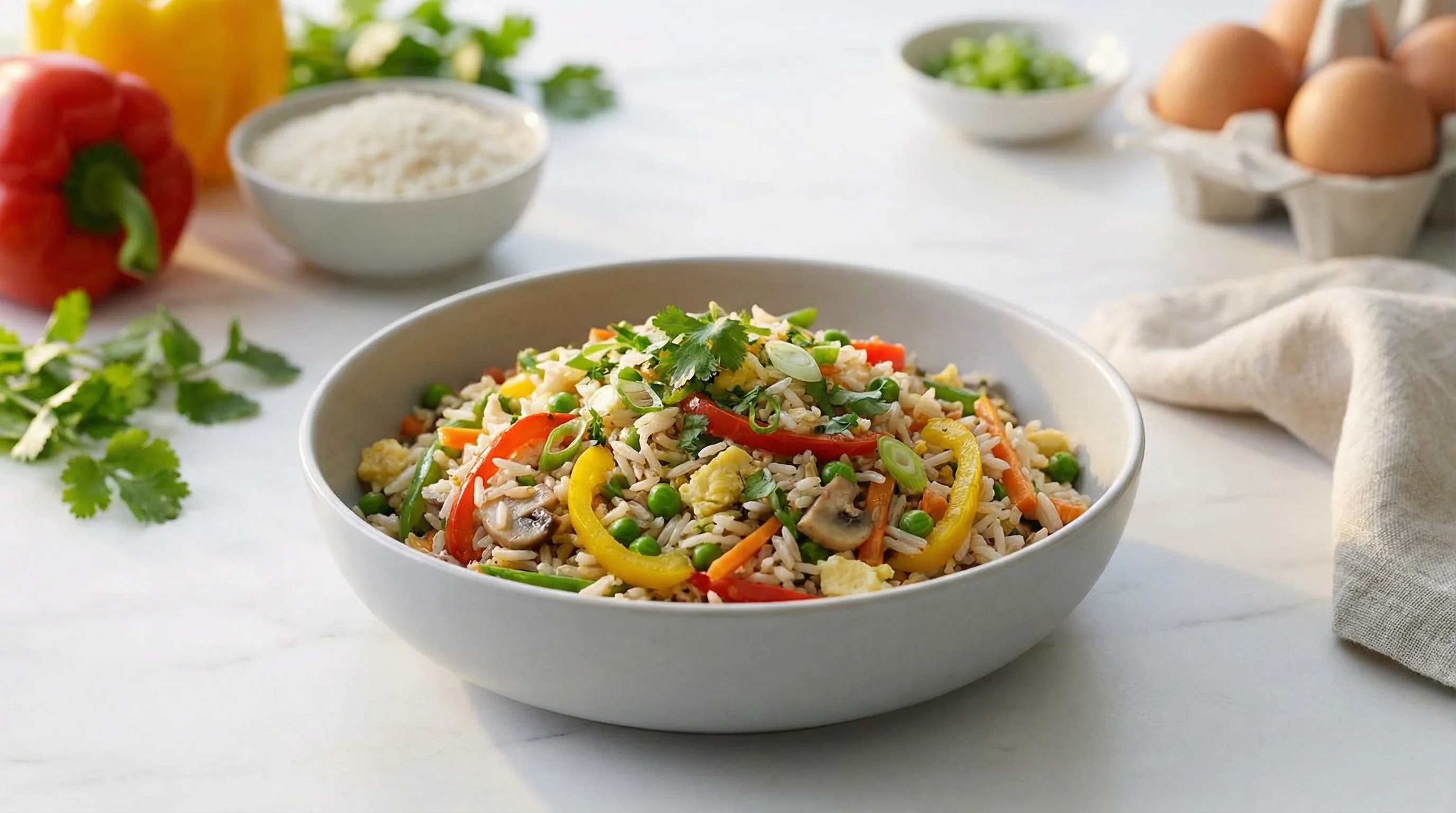
Rainbow Vegetable Egg Fried Rice (Low FODMAP)
Vibrant veggie-packed fried rice ready in 30 minutes. A gut-friendly takeout favorite that's fresher, healthier, and easier on your digestive system.
This recipe is low FODMAP when prepared as directed. Critical modifications: use only the green tops of spring onions (30g total), as the white bulbs contain high levels of fructans. Oyster mushrooms (100g total, 25g per serving) are specified because common button mushrooms contain mannitol, a FODMAP polyol. Bell peppers are low FODMAP in portions up to 75g per serving—this recipe uses 300g total (75g per person). Carrots (75g total, about 19g per serving) are low FODMAP. Green beans (100g total, 25g per serving) are safe in this quantity. Peas are limited to 60g total (15g per serving), well within the safe 35g per serving limit. White rice (500g cooked, 125g per serving) is naturally low FODMAP. Ensure your soy sauce is gluten-free tamari to avoid wheat-based FODMAPs. This recipe serves 4 people with approximately 125g rice and 150g vegetables per portion.
When you're craving Chinese takeout but need to keep your gut happy, this Rainbow Vegetable Egg Fried Rice delivers all the satisfaction without the FODMAP triggers. This recipe transforms humble leftover rice into a colorful, restaurant-quality dish that's actually better than delivery.
The secret to perfect fried rice lies in using day-old rice that's been chilled in the refrigerator. Fresh rice is too moist and will turn mushy when stir-fried, but cold rice has dried out just enough to achieve those coveted separate, slightly crispy grains. If you're planning ahead, cook your rice the night before and spread it on a baking sheet to cool quickly before refrigerating.
This recipe is naturally low FODMAP when you follow a few simple guidelines. We use only the green tops of spring onions, which contain minimal FODMAPs compared to the white bulbs. The rainbow of bell peppers adds sweetness and crunch without digestive distress, while oyster mushrooms provide that umami depth without the mannitol found in common button mushrooms. Each vegetable is cut into thin, quick-cooking pieces that maintain their texture and vibrant color.
The technique is straightforward but important: a smoking-hot wok creates that characteristic wok hei (breath of the wok) flavor that makes restaurant fried rice so addictive. Don't overcrowd the pan, and keep everything moving constantly. The eggs cook first, creating golden ribbons throughout the rice, while the vegetables stay crisp-tender. A splash of tamari at the end brings everything together with that essential savory note. This is weeknight cooking at its finest—fast, flexible, and completely gut-friendly.
🥗 Ingredients
Metric
- sunflower oil 3 tablespoons (45ml)
- free-range eggs 2 large (about 100g), beaten
- spring onions (green tops only) 2 stalks, sliced on an angle (about 30g green parts)
- green bell pepper ½ medium pepper (75g), deseeded and thinly sliced
- red bell pepper ½ medium pepper (75g), deseeded and thinly sliced
- yellow bell pepper ½ medium pepper (75g), deseeded and thinly sliced
- orange bell pepper ½ medium pepper (75g), deseeded and thinly sliced
- carrot 1 medium (75g), peeled and julienned or coarsely grated
- green beans 100g, trimmed and cut into 1cm pieces
- oyster mushrooms 100g, roughly chopped
- frozen peas 60g (about ⅓ cup), defrosted
- cooked white rice 500g (about 3 cups), day-old and refrigerated
- tamari or gluten-free soy sauce 2-3 tablespoons (30-45ml), to taste
- salt to taste
- black pepper freshly ground, to taste
Imperial
- sunflower oil 3 tablespoons (45ml)
- free-range eggs 2 large (about 100g), beaten
- spring onions (green tops only) 2 stalks, sliced on an angle (about 30g green parts)
- green bell pepper ½ medium pepper (75g), deseeded and thinly sliced
- red bell pepper ½ medium pepper (75g), deseeded and thinly sliced
- yellow bell pepper ½ medium pepper (75g), deseeded and thinly sliced
- orange bell pepper ½ medium pepper (75g), deseeded and thinly sliced
- carrot 1 medium (75g), peeled and julienned or coarsely grated
- green beans 100g, trimmed and cut into 1cm pieces
- oyster mushrooms 100g, roughly chopped
- frozen peas 60g (about ⅓ cup), defrosted
- cooked white rice 500g (about 3 cups), day-old and refrigerated
- tamari or gluten-free soy sauce 2-3 tablespoons (30-45ml), to taste
- salt to taste
- black pepper freshly ground, to taste
👨🍳 Instructions
- 1
Prepare the egg ribbons
Heat a large wok or wide skillet over high heat until it begins to smoke slightly. Add the sunflower oil and swirl to coat the surface. Pour in the beaten eggs and immediately start swirling them around the wok with a wooden spoon or ladle, breaking them into ribbons as they set. This should take about 30-45 seconds. The eggs should be just cooked through but still soft and golden.
⏱️ 2 min - 2
Stir-fry the aromatics and peppers
Add the sliced spring onion greens and all four colors of bell peppers to the wok. Stir-fry vigorously for about 1 minute, keeping everything moving constantly. The peppers should start to soften slightly at the edges while maintaining their crisp texture and bright colors. The high heat will create slight charring that adds depth of flavor.
⏱️ 2 min - 3
Add remaining vegetables
Toss in the shredded carrot, green beans, chopped oyster mushrooms, and defrosted peas. Season with a generous pinch of salt and several grinds of black pepper. Continue stir-frying for 2-3 minutes, tossing frequently, until the vegetables are tender-crisp. The mushrooms should release some moisture and become golden, while the carrots soften but still have a slight bite.
⏱️ 3 min - 4
Incorporate the rice
Break up any clumps in the cold rice with your hands before adding it to the wok. Add the rice and use your spatula to break up any remaining chunks, tossing and stirring constantly to combine with the vegetables and eggs. Stir-fry for 3-4 minutes until every grain is heated through and the rice begins to take on a slightly toasted appearance. You should hear a gentle sizzle as the rice hits the hot wok.
⏱️ 5 min - 5
Season and serve
Drizzle the tamari or gluten-free soy sauce evenly over the rice, then toss everything together for another minute to distribute the seasoning throughout. Taste and adjust the seasoning with additional tamari, salt, or pepper as needed. The rice should be fragrant, with each grain separate and lightly coated in sauce. Serve immediately while piping hot, garnished with extra spring onion greens if desired.
⏱️ 2 min
🔄 FODMAP-Friendly Swaps
White bulbs contain high fructans; green tops are low FODMAP
Button mushrooms contain mannitol; oyster mushrooms are low FODMAP
Regular soy sauce often contains wheat; tamari is wheat-free and low FODMAP
🔬 The Science Behind This Recipe
The magic of fried rice lies in the science of starch retrogradation. When rice is cooked and then cooled, the starch molecules undergo a structural change, forming tighter crystalline structures that make the grains firmer and less sticky. This is why day-old refrigerated rice produces superior fried rice—the dried-out, firm grains can withstand high-heat stir-frying without turning mushy, and they develop that characteristic slightly chewy texture and toasted flavor that fresh rice simply cannot achieve. The high heat of the wok also triggers the Maillard reaction, creating complex savory flavors and aromas that give fried rice its irresistible appeal. From a digestive perspective, cooled and reheated rice contains more resistant starch than freshly cooked rice, which may actually be easier on your gut and provide prebiotic benefits that support healthy gut bacteria without triggering FODMAP symptoms.
Download Printable PDF
Save this recipe for offline use