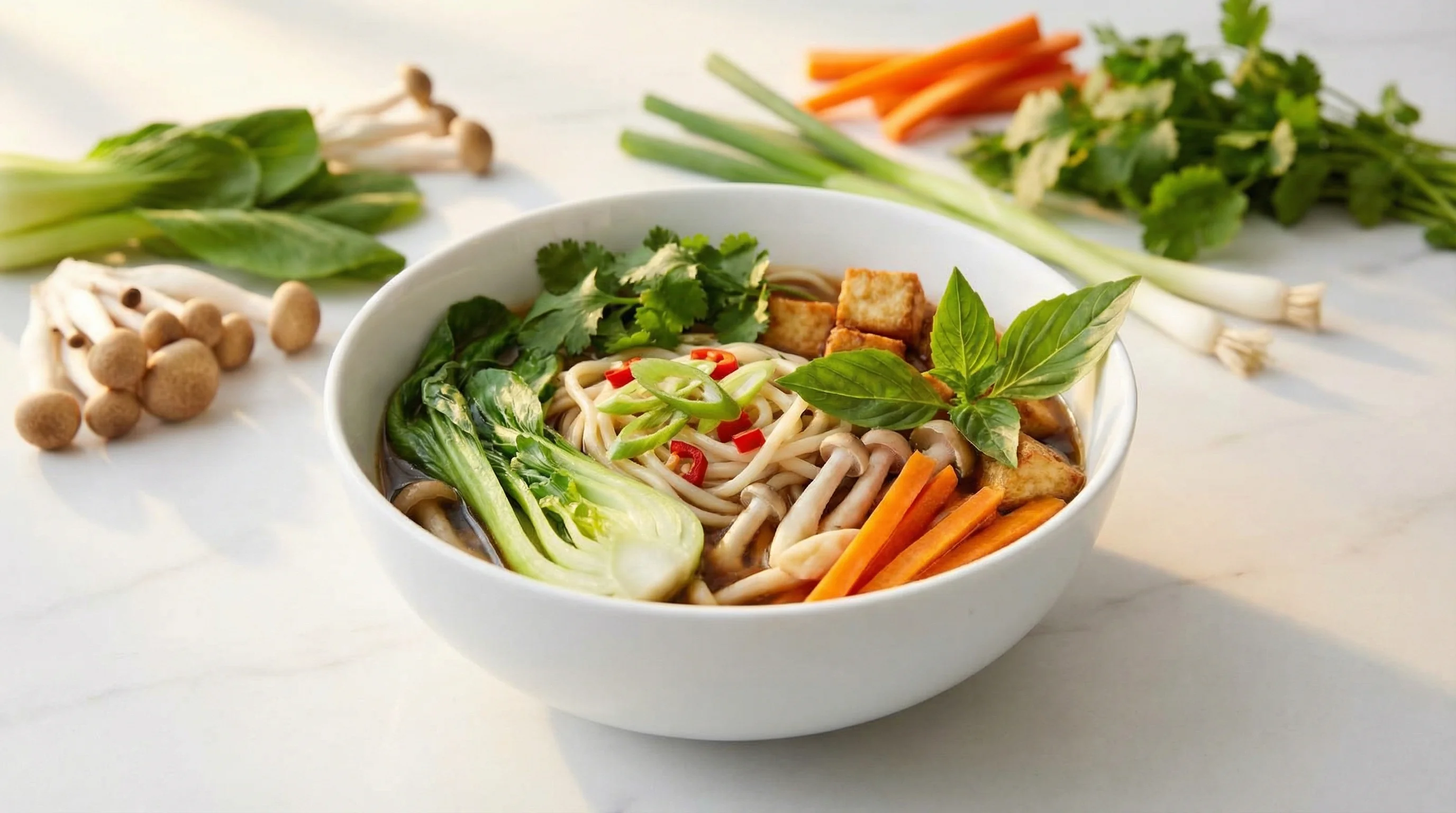
Umami Miso Ramen with Crispy Tofu (Low FODMAP)
A soul-warming Japanese ramen bowl packed with umami flavor, crispy tofu, and tender vegetables—ready in 30 minutes and completely gut-friendly.
This recipe is carefully designed to be low FODMAP when following these guidelines: Use only the green tops of spring onions—the white bulbs contain high levels of fructans. Choose firm or extra firm tofu, as the pressing process removes water-soluble fructans; avoid soft or silken tofu. Ensure your miso paste is made from soybeans and rice (most brown miso is safe in small amounts up to 2 teaspoons per serving according to Monash University testing). Verify that your tamari is labeled gluten-free. Select certified gluten-free noodles—100% buckwheat soba or rice noodles are excellent choices. Shimeji mushrooms are low FODMAP in servings up to 75g per person. Pak choi is low FODMAP in servings up to 250g. Fresh ginger, chilli, lime juice, and coriander are all low FODMAP in the amounts used. This recipe provides approximately 387 calories per serving with good protein content from the tofu.
There's something deeply comforting about a steaming bowl of ramen, and this low FODMAP version proves you don't need to sacrifice flavor for digestive peace. This recipe transforms simple, gut-friendly ingredients into a restaurant-quality meal that's ready faster than takeout delivery.
The secret to this ramen's incredible depth lies in the miso paste—a fermented soybean condiment that delivers that coveted umami punch without triggering IBS symptoms. Combined with tamari (a gluten-free soy sauce alternative that provides the same savory depth without wheat-based fructans), fresh ginger, and a hint of chili heat, the broth develops layers of savory complexity that make each spoonful satisfying.
We've made this recipe completely FODMAP-safe by using only the green tops of spring onions (the white bulbs contain fructans), choosing firm tofu (which has had water-soluble FODMAPs drained away during processing), and selecting gluten-free noodles. The shimeji mushrooms add an earthy note and meaty texture, while pak choi provides a fresh, slightly sweet crunch that balances the rich broth.
This is the kind of meal that feels like a warm hug after a long day. The preparation is straightforward—no complicated techniques or hard-to-find ingredients—yet the result tastes like you've spent hours perfecting it. Whether you're new to the low FODMAP diet or a seasoned pro looking for quick weeknight inspiration, this ramen bowl delivers comfort, nutrition, and flavor in one beautiful package. Plus, it's completely vegan, making it perfect for plant-based eaters managing IBS.
🥗 Ingredients
Metric
- olive oil 1 tsp
- small red chilli 1 (about 5g), finely chopped, plus extra sliced for garnish
- fresh ginger 2.5cm piece (about 10g), peeled and finely grated
- firm or extra firm tofu 140g, drained, dried, and cut into 2cm cubes
- tamari 1 tbsp (gluten-free soy sauce)
- brown miso paste 2 tsp (rice-based, low FODMAP certified)
- lime juice 1 tbsp, freshly squeezed
- shimeji mushrooms 75g, separated into individual stems
- spring onion greens 2 stalks, green tops only, finely chopped (discard white bulbs)
- gluten-free noodles 200g (100% buckwheat soba or rice noodles)
- pak choi 2 small heads (about 200g total), halved lengthwise
- carrot 1 medium (about 80g), julienned into thin ribbons
- fresh coriander small handful, leaves and tender stems
Imperial
- olive oil 1 tsp
- small red chilli 1 (about 5g), finely chopped, plus extra sliced for garnish
- fresh ginger 2.5cm piece (about 10g), peeled and finely grated
- firm or extra firm tofu 140g, drained, dried, and cut into 2cm cubes
- tamari 1 tbsp (gluten-free soy sauce)
- brown miso paste 2 tsp (rice-based, low FODMAP certified)
- lime juice 1 tbsp, freshly squeezed
- shimeji mushrooms 75g, separated into individual stems
- spring onion greens 2 stalks, green tops only, finely chopped (discard white bulbs)
- gluten-free noodles 200g (100% buckwheat soba or rice noodles)
- pak choi 2 small heads (about 200g total), halved lengthwise
- carrot 1 medium (about 80g), julienned into thin ribbons
- fresh coriander small handful, leaves and tender stems
👨🍳 Instructions
- 1
Build the aromatic base
Heat the olive oil in a large wok or deep skillet over medium heat. Once shimmering, add the finely chopped chilli and grated ginger. Stir-fry for about 2 minutes until fragrant and the ginger begins to soften, being careful not to let them burn. The kitchen should smell wonderfully aromatic at this point.
⏱️ 2 min - 2
Cook the tofu and mushrooms
Increase the heat to high and add the cubed tofu to the wok. Let it sear undisturbed for 1-2 minutes to develop a golden crust, then stir. Add the tamari, miso paste, lime juice, separated shimeji mushrooms, and a splash of water (about 2-3 tablespoons). Stir-fry everything together for 5 minutes, allowing the tofu to absorb the flavors and develop crispy edges while the mushrooms soften and release their earthy essence.
⏱️ 6 min - 3
Create the broth
Pour 1.5 litres (about 6 cups) of just-boiled water into the wok, stirring to dissolve any miso paste that hasn't fully incorporated. Reduce the heat to maintain a gentle simmer. Add the chopped green spring onion tops and let the broth simmer for 2-3 minutes to allow the flavors to meld. Taste the broth and adjust seasoning—add more chilli for heat, ginger for zing, or a pinch of salt if needed.
⏱️ 5 min - 4
Cook the noodles
Add the gluten-free noodles directly to the simmering broth and cook according to the package instructions, typically 4-6 minutes for rice noodles or 5-7 minutes for buckwheat noodles. Stir occasionally to prevent sticking. The noodles should be tender but still have a slight bite when done.
⏱️ 6 min - 5
Assemble and serve
While the noodles finish cooking, divide the sliced pak choi between two large serving bowls, arranging them so the leafy green tips stand upright around the edges. Using a ladle, carefully transfer the noodles, tofu, mushrooms, and hot broth into each bowl, filling them generously. Top each bowl with julienned carrot ribbons, extra sliced chilli for heat, a sprinkle of reserved spring onion greens, and fresh coriander sprigs. Serve immediately while piping hot.
⏱️ 3 min
🔄 FODMAP-Friendly Swaps
Regular soy sauce often contains wheat, which is high in fructans. Tamari is traditionally wheat-free and provides the same umami flavor without triggering IBS symptoms.
The white bulb portions of spring onions are high in fructans, while the green tops are low FODMAP and safe to consume in generous amounts.
Firm tofu has been pressed to remove excess water, which also removes water-soluble fructans. Soft tofu retains these FODMAPs and should be avoided on a low FODMAP diet.
Traditional wheat noodles are high in fructans. Gluten-free alternatives like 100% buckwheat soba or rice noodles provide the same satisfying texture without triggering digestive symptoms.
🔬 The Science Behind This Recipe
This recipe leverages several scientifically-validated low FODMAP ingredients to create a gut-friendly meal without compromising flavor. Miso paste, when made from soybeans and rice, is low FODMAP in servings up to 2 teaspoons per person according to Monash University testing. The fermentation process breaks down oligosaccharides that would otherwise trigger IBS symptoms, while preserving the beneficial umami compounds (glutamates) that give miso its savory depth.
Firm tofu is a crucial swap in this recipe. During the pressing process that creates firm and extra-firm tofu, water-soluble fructans are removed along with excess moisture. Monash University has tested firm tofu at 170g servings and found it to be low FODMAP, while soft or silken tofu retains these problematic carbohydrates. The protein content in tofu (approximately 8-10g per 100g) also helps stabilize blood sugar and promotes satiety.
The distinction between spring onion whites and greens is critical for FODMAP safety. The white bulb portions contain high levels of fructans (a type of oligosaccharide that ferments in the gut), while the green tops are predominantly composed of water, fiber, and flavor compounds without significant FODMAP content. This allows you to enjoy the fresh, mild onion flavor without digestive distress.
Shimeji mushrooms are low FODMAP in servings up to 75g per person. They contain the compound ergothioneine, a powerful antioxidant, and provide umami flavor through naturally occurring glutamates. Ginger contains gingerol compounds that have been shown in clinical studies to have anti-inflammatory properties and may help reduce nausea and support digestive motility, making it particularly beneficial for IBS sufferers beyond its FODMAP-friendly status.
Download Printable PDF
Save this recipe for offline use